

What Is Speculation In Forex
What is Speculation?
Speculation is the buying of an asset or financial instrument with the hope that the price of the asset or financial instrument will increase in the future. Speculative investors tend to make decisions more often based on technical assay of market price activity rather than on fundamental analysis of an nugget or security . They also tend to be more active market traders – ofttimes seeking to profit from brusque-term price fluctuations – equally opposed to being "buy and concur" investors.
Speculation is often frowned upon and derided past many financial experts. Yet, the truth is that speculators do not deserve the common public perception that casts them as "bad guys." Speculators aren't bad guys – they're helpful guys (and gals).
Speculators are the people who create fortunes, attend ideas, businesses, and economies, and who assistance create "the side by side big thing." Nib Gates and Steve Jobs were speculators; Warren Buffett is a speculator. Venture capitalists – the people who fund start-ups for new ideas and new businesses – are speculators. In curt, speculators are an of import and valuable part of the world's financial markets.
Who are the Speculators?
Speculators are people who appoint in speculative investments. In other words, a speculator is a person who buys avails, financial instruments, commodities, or currencies with the hope of selling them at a profit on a future date. So they're not actually all that fundamentally unlike from other market participants who also enter the fiscal markets looking for financial rewards. Many people point to the main difference betwixt investors and speculators as follows:
An investor is concerned with the fundamental value of his investment, whereas a speculator is only concerned with market price motion. In other words, for example, a speculator doesn't really care if a company is performing well or poorly – only nigh whether or not he tin profit from trading the company'south stock.
" Modern usage has made the term speculator a synonym for gambler and plunger. Actually, the word comes from the Latin 'speculari', which means to spy out and notice. I take defined a speculator as a human who observes the future and acts before information technology occurs. To be able to do this successfully — and information technology is an power of priceless value in all man affairs — three things are necessary: Offset, i must become the facts of a situation…Second, 1 must form a judgment as to what those facts portend. Third, one must deed in time, earlier it is likewise belatedly…If action is delayed until the demand is apparent to anybody, it volition be too late. " – from "My Own Story," by Bernard Baruch
Types of Speculators
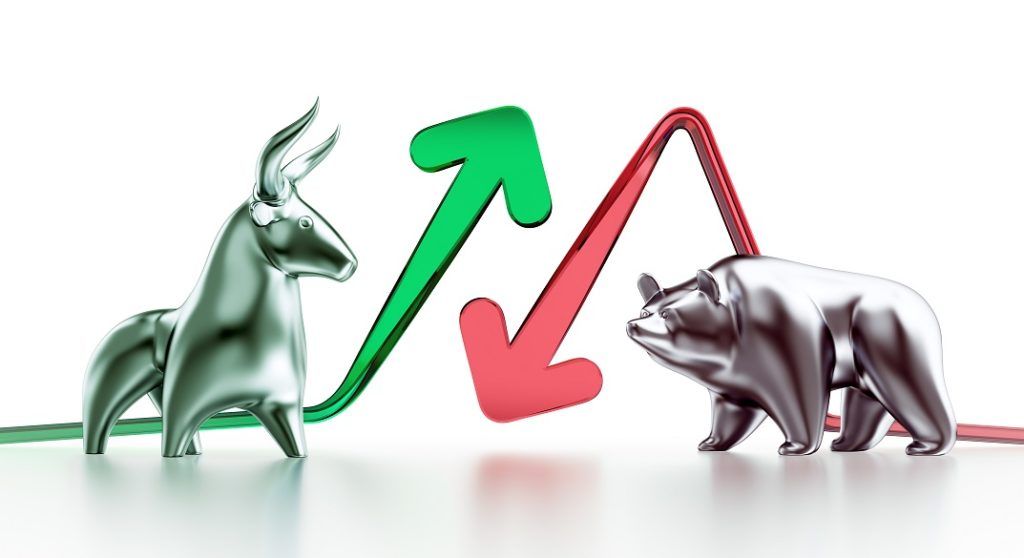
1. Bullish speculator
A bullish speculator expects the prices of securities to rise. A bull is a speculator who buys securities with the hope of selling them at a higher price in the future.
ii. Bearish speculator
A bearish speculator is one who expects the prices of securities to fall in the future. A bearish speculator sells short securities, aiming to profit from beingness able to repurchase them at a lower cost at some point in the future.
One of the notable characteristics of speculators is that they readily trade in both bull and bear markets, being equally comfortable with both buying long and selling short.
Advantages of Speculation
1. Welfare of the economic system
Speculators, who are typically willing to take on greater investment risk than the average investor, are more willing to invest in a company, nugget, or security that is unproven or whose stock is trading at a very low cost, during times or in situations where more than bourgeois investors shy abroad.
Thus, speculators often provide the capital that enables immature companies to grow and expand, or that provides price back up for avails or industries that have temporarily fallen on financially hard times or out of favor. In such a way, speculators aid to support and drive forward the overall economy.
two. Market liquidity
Speculators add together liquidity to the markets by actively trading. A market without speculators would exist an illiquid marketplace, characterized past large spreads between bid and ask prices, and where it might be very difficult for investors to purchase or sell investments at a fair market cost. The participation of speculators keeps markets fluid and helps facilitate easy commutation between buyers and sellers at all times.
3. Chance bearing
The higher risk tolerance of speculators translates to financing for companies being more widely and readily available. Speculators are willing to risk lending money to companies, governments, or business ventures that either lack established credit or that are currently with poor credit rating . Without speculators, the only businesses able to obtain loans would be those large, already established firms with a stellar credit rating.
Disadvantages of Speculation
1. Unreasonable prices
Speculation can sometimes push prices across reasonable levels, to excessively loftier or depression valuations that do not accurately reflect an nugget or security's truthful intrinsic value. It means that speculation may lead to toll fluctuations that, even though they are merely temporary, tin can have a long-term affect on the fortunes and stability of a company, an manufacture, or fifty-fifty a whole economic system.
For example, some economists and market analysts accept argued that extremely high oil prices early in the 21st century – around $100 a butt – were due more to widespread speculation than to actual supply and need conditions in the market place.
ii. Economic bubbles
A related disadvantage to unreasonable prices is that rampant speculation is ofttimes connected with economic bubbles, which course due to an unrealistically loftier rise in prices. A speculative bubble results from demand by speculators initially driving prices higher, which then draws in more speculators, driving prices even college.
The cycle is repeated – rising prices equally a result of increased demand from speculators, followed by new buyers attracted past the speedily rising prices increasing demand further, driving the market place to fifty-fifty higher prices – until the bubble bursts and prices dramatically decline.
The housing bubble was an example of such a bubble. Real manor investors paid higher and higher prices for existent estate, expecting prices to go along ascent indefinitely. When the toll rise finally stalled out and prices began to autumn back toward more realistic, fair market price levels, many investors in real manor found themselves overextended and stuck with properties that were now worth less than what they had paid for them.
Speculation in the Stock Marketplace
Stocks that are considered highly risky in the stock market are known as speculative stocks. Speculative stocks offer potentially high returns to compensate for the high adventure associated with them. Penny stocks with very low share prices are an example of speculative stocks. Some stock market speculators are day traders who seek to profit from the intraday fluctuations in stock prices that occur within the trading day.
As noted above, speculators are important to publicly-traded companies because they are willing to invest in unproven companies, providing those companies with equity funding that enables them to grow and expand their marketplace reach.
Speculation in the Currency Market
The foreign currency exchange (forex) market is popular with speculators because of the fact there are constant fluctuations in the substitution rates between currencies, both on an intraday and long-term basis. The currency market place too provides frequent trading opportunities due to the many different currency pairs that are bachelor for trading.
For example, the exchange rate of the The states dollar can exist traded relative to more than a dozen other currencies worldwide. Amid the most commonly traded currency pairs are EUR/USD (the euro vs. the dollar), GBP/USD (the British pound vs. the dollar), and USD/JPY (the dollar vs. the Japanese yen).
Forex trading is also popular with speculators considering of the loftier amount of leverage available, which makes it easy for traders to generate substantial profits using merely a small-scale amount of trading uppercase.
Speculation in the Commodity Market
In the article markets, speculation is important to control the price volatility of bolt considering without speculators, there would be only a very limited number of market participants. Commodities are much less widely traded than stocks.
Speculators add significantly more than liquidity to the commodity markets, thereby helping to facilitate trading among all the market place participants. Speculation in commodity futures is popular because, like forex trading, article trading offers traders high amounts of leverage.
Speculators likewise influence prices of commodities in a way that helps to protect against massive price swings past using futures contracts to encourage buyers to stockpile in order to prevent shortages.
Speculators, past vastly increasing the number of market participants, also importantly serve to prevent market manipulation. With and so many traders holding a diversity of trading positions, information technology is difficult for even the largest participants in the market to successfully manipulate prices or "corner the market" (take control of virtually all the supply of a commodity).
Determination
Speculation remains a chief force in the fiscal markets, regardless of the Dodd-Frank Deed 'south attempt to curtail it. As long as there is trading in assets and financial instruments, with the potential for turn a profit, there will exist speculators aiming to make money.
Related Readings
Thanks for reading CFI's guide on Speculation. To keep learning and advancing your career, the post-obit resources volition be helpful:
- Investing: A Beginner's Guide
- How to Read Stock Charts
- Stock Investment Strategies
- Underweight Recommendation

Source: https://corporatefinanceinstitute.com/resources/knowledge/trading-investing/speculation/
Posted by: grecorattind66.blogspot.com
0 Response to "What Is Speculation In Forex"
Post a Comment